ISLAMABAD: Pakistan’s fuel supply chain remains stable despite rising volatility in global oil markets caused by escalating tensions in the Middle East, a senior government official said on Wednesday.
Mosharraf Zaidi, spokesperson for the prime minister on foreign media, told Bloomberg that authorities are closely monitoring supply chains and taking steps to prevent fuel shortages while managing the impact of higher petroleum prices on consumers.
“The situation in terms of supply chains, stocks and active contracts where shipments are already on the way — things are stable to good,” Zaidi said.
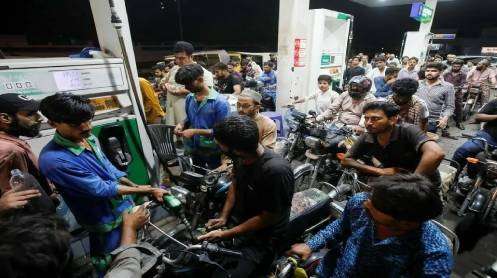
However, he acknowledged that the recent increase in petroleum prices has significantly affected consumers in Pakistan. “The rise in petrol and diesel prices has hit the Pakistani consumer really hard. There’s a lot of concern,” he added.
Last week, the government increased the prices of petrol and high-speed diesel by Rs55 per litre. Following the hike, the ex-depot price of high-speed diesel was set at Rs335.86 per litre, while the ex-depot petrol price rose to Rs321.17 per litre, up from Rs266.17, reflecting an increase of around 17 percent.
Zaidi said the government’s primary focus is to ensure that fuel remains available across the country despite disruptions in global supply routes.
“The real task for us in Pakistan is to ensure that, regardless of the price at the pump, the Pakistani consumer does not face any kind of severe or dangerous shortage of fuel or supplies,” he said.
He explained that the early decision to increase fuel prices helped cushion supply chains by allowing oil marketing companies to absorb higher costs and maintain imports.
According to Zaidi, Pakistan may have been among the first countries to raise fuel prices in anticipation of worsening global conditions, which helped ensure supply certainty for the country’s oil marketing companies.
He also highlighted the logistical challenges caused by disruptions in the strategic Strait of Hormuz — a key shipping route for global energy trade.
Normally, oil shipments take about five to six days to reach Pakistan due to its proximity to the Gulf region. However, disruptions in the strait have forced some shipments to use alternative routes, extending delivery times to 18 to 20 days.
The government has also introduced austerity measures to conserve fuel and reduce public spending. Earlier this week, Shehbaz Sharif, Prime Minister of Pakistan, announced a national austerity policy aimed at cutting government energy consumption in response to the global energy crisis triggered by the conflict involving the United States, Israel and Iran.
Officials say these measures are part of a broader strategy to ensure energy security and stabilise fuel supplies during the ongoing geopolitical turmoil.